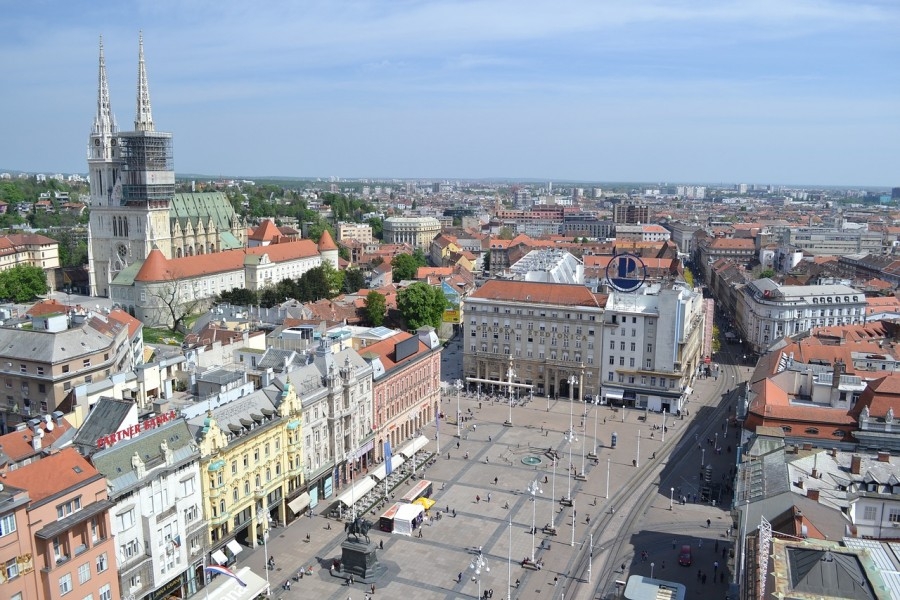
 Photo: Pixabay
From January 1 of next year, Croatia will introduce euro as its official currency and enter the Schengen zone, which will abolish border control on land and sea Croatian borders with other countries of the Schengen zone, and from March also in airports. The directors of the two largest real estate agencies in the country assessed for STA what kind of impact it will have on the real estate market in Croatia.
Real estate prices have risen significantly in recent years in Croatia as well. The introduction of the euro will not significantly affect their prices, but Croatia's entry into the Schengen area will increase the interest of foreigners in buying real estate. After the introduction of the euro, prices will probably be corrected upwards, even though the real estate market in Croatia has been operating in euros for a long time, that is, prices are communicated in euros and paid in kuna.
"It will be easier for foreigners to count in their own currency." It will also be much easier to perform transactions than transactions with an exchange rate difference, because the buyer must pay the amount in kuna according to the agreed exchange rate to purchase real estate in Croatia," explained Sergio Serdarušić from the Eurovilla agency for the STA agency.
Borislav Vujović from the Opereta agency also believes that the introduction of the euro in Croatia will not be a key factor in real estate prices.
"However, the psychological barrier that may exist due to currency conversion, which has its own price, will definitely disappear," he added.
Schengen will affect the market in the sense that it will be easier for people from the surrounding area to come to Croatia when there are no more border controls, which should also increase demand, Serdarušić said. He expects a greater interest in buying real estate after Croatia's entry into the Schengen area and a consequent increase in prices in the border counties, Istria and Primorje-Gorski Kotar, where the majority of real estate is bought by foreigners.
According to real estate agents, foreigners in Croatia more often buy real estate as an investment, rather than for personal needs. Foreigners buy real estate more as an investment for the purpose of renting, given that the taxes are very low and flat, and they often sell the real estate at a higher price immediately after the purchase, explained Serdarušić.
He added that foreigners buy exclusively on the coast, and there are very few transactions in the interior of Croatia and Zagreb, while there is no information for the area of Lika, Gorski kotar and Slavonia.
Foreign buyers most often come from Slovenia, Germany, Slovakia, Hungary, the Czech Republic, Poland and Austria, but demand has also increased from Scandinavian countries and the Netherlands.
The prices of residential real estate in Croatia increased by 3.7 percent in the second quarter of this year, and by 13.6 percent on an annual basis, according to data from the Croatian Bureau of Statistics. This continues the growth of residential real estate prices in Croatia, which has been ongoing since the second quarter of 2017.
Source: seebiz.eu