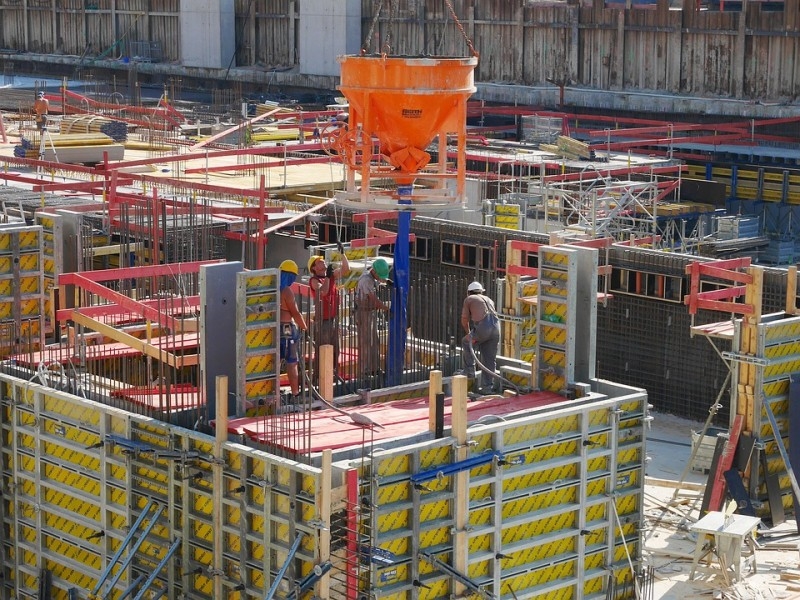
 Photo: Pixabay
For almost three decades, Serbia has been trying to deal with illegal facilities. Of the more than two million listed houses, buildings and premises built without approval, 326,569 have received legalization decisions so far.
According to the latest legal changes, the administration has a deadline to deal with all of them by the end of next year. The competent ministry announced another, more effective, legal solution, but the new government will have to come up with it.
The past decades have shown that the demolition of illegals is perhaps an even bigger problem than legalization.
"Since 2015, the Ministry of Construction has demolished 95 buildings. We do not have data on demolished buildings under the jurisdiction of AP Vojvodina and local self-government units. The problems surrounding the legalization are mainly unresolved property-legal relations and the consent of the co-owners on the land on which there is co-ownership right", said the department.
The Ministry removes facilities in accordance with the program it prepares quarterly and with the available budget funds.
Two years ago, the National Alliance for Local Economic Development investigated the main problems in legalization. Despite many attempts to improve it, in practice it is still too slow. Their estimate then was that at this rate it would end in - 40 years.
"The procedure needs to be digitized, above all the communication between institutions. A commission should be formed at the national level, which will separate the more demanding from the simpler cases, so that the latter can be completed more quickly. There would have to be a deadline in which public companies and other institutions would give answers, and if they don't, the procedure should continue. On average, six workers in the municipalities deal with legalization, and each receives 1,100 cases. We need to look at whether the fees that have to be paid are high", says Jasmina Radovanović from Naled.
There are also legal issues. For example, who can apply for legalization in a building.
That would have to be done by the investor, not the owner of the apartment.
Local governments admit that illegal construction has not stopped. For legalization, the cut should be a satellite image from 2015. In practice, construction continues without a permit.
"About 80% of local self-governments admit that they are still being built illegally", says Jasmina Radovanović.
Source: novosti.rs